Home › Asphalt Pathways, Sidewalks, and Trails
Add safe, accessible routes with asphalt pathway paving in Denver, CO. We construct smooth sidewalks, walking paths, and multi use trails for parks, campuses, and commercial sites so pedestrians and cyclists have comfortable, predictable surfaces to travel on.
Precision Asphalt Denver provides professional asphalt pathway paving throughout Denver, CO, Colorado and the surrounding area. Our licensed, insured crew delivers safe, clean, on-time work with a free estimate before anything begins. Call (720) 807-8328 or request your free quote.
Asphalt Pathways, Sidewalks, and Trails in Denver, CO
If you need a new walkway through your HOA greenbelt, a safe sidewalk connection to a school, or a low‑maintenance trail in a city park, Precision Asphalt Denver focuses on asphalt pathway paving that fits how people actually use your space. We work across the Denver metro area, from tight urban infill projects to long meandering paths along drainage corridors.
Denver’s climate is hard on pavements. Freeze thaw cycles, intense sun at elevation, and snow removal equipment all work against poorly built paths. Our crews build asphalt pathways, sidewalks, and trails with those local stresses in mind, so you get a smooth surface that stays usable instead of crumbling after a few winters.
We regularly help property managers, HOAs, schools, churches, business parks, and municipal clients plan paved routes that meet ADA access needs, handle stormwater correctly, and still look clean and intentional. From the first walk of your site to the final compaction pass, you have a local partner who understands both city standards and neighborhood expectations.
How Our Asphalt Pathway Paving Process Works
Every successful pathway or trail project in Denver starts with a site walk and a realistic discussion about how the route will be used. At Precision Asphalt Denver, we begin by reviewing drainage, existing grades, and any trip hazards or bottlenecks you want to fix. We note down drive crossings, utility lids, tree roots, irrigation lines, and areas that stay wet after storms.
Next, we design the alignment (the exact route on the ground) and typical section (how many inches of base and asphalt). On new installations, we strip vegetation and soft organic soils, then fine grade the subgrade. On replacements, we saw cut and remove failed concrete or asphalt, haul it off for recycling, and proof roll the exposed subgrade to find soft spots.
A compacted aggregate base is installed and machine compacted in lifts. For high use sidewalks we typically recommend 4 to 6 inches of road base. For light use trails this might be 3 to 4 inches, adjusted for soil conditions and expected traffic. Once the base checks out on grade and compaction, we place hot mix asphalt using either a small paver or hand work for tight areas.
We usually install 2 to 3 inches of asphalt in one lift for paths and sidewalks. Wider greenway trails or sections with maintenance vehicles might receive a thicker section. The mix is placed hot, raked to remove imperfections, then compacted with vibratory rollers and plate compactors at edges and around structures. Joints are carefully lapped and compacted so the surface feels continuous underfoot or under a bicycle tire.
At the end, we address transitions to existing sidewalks, driveways, and roadways so users are not left with abrupt bumps. Where needed, we add fine grading along the edges so there is no drop off that could twist an ankle or collect standing water.
Design Options for Walkways, Sidewalks, and Trails
Asphalt pathways are more flexible than most people realize. With Precision Asphalt Denver, you can tailor width, alignment, and surface details to match how the space is used and what your budget allows.
Width is one of the first decisions. Residential walkways are often 4 to 5 feet wide, which works well for two people walking side by side. Apartment complexes, schools, and parks lean toward 6 to 8 feet so pedestrians, strollers, and bikes can comfortably pass. Multi‑use trails that expect both bikes and foot traffic may go 8 to 10 feet or more.
Curve design matters in Denver’s open spaces. Gentle curves feel more natural in parks and along greenbelts and they help with sight lines for bikes. In tight urban courtyards or around buildings we may use more squared geometry to line up with existing hardscape, lighting, or entrances.
For drainage, we typically build in a slight cross slope, usually about 2 percent, so water sheds to one side rather than pooling on the walking surface. Depending on your site grading, this might mean adding shallow swales, tying into existing inlets, or using asphalt curb edges to guide runoff.
Surface finish can also be tuned. Standard pathways are compacted to a tight, dense surface. For trails intended for running or casual walking, some clients like a slightly more textured finish that improves grip during light snow or after a rain. We achieve this by adjusting the final rolling pattern, while still keeping the surface smooth enough for strollers and wheelchairs.
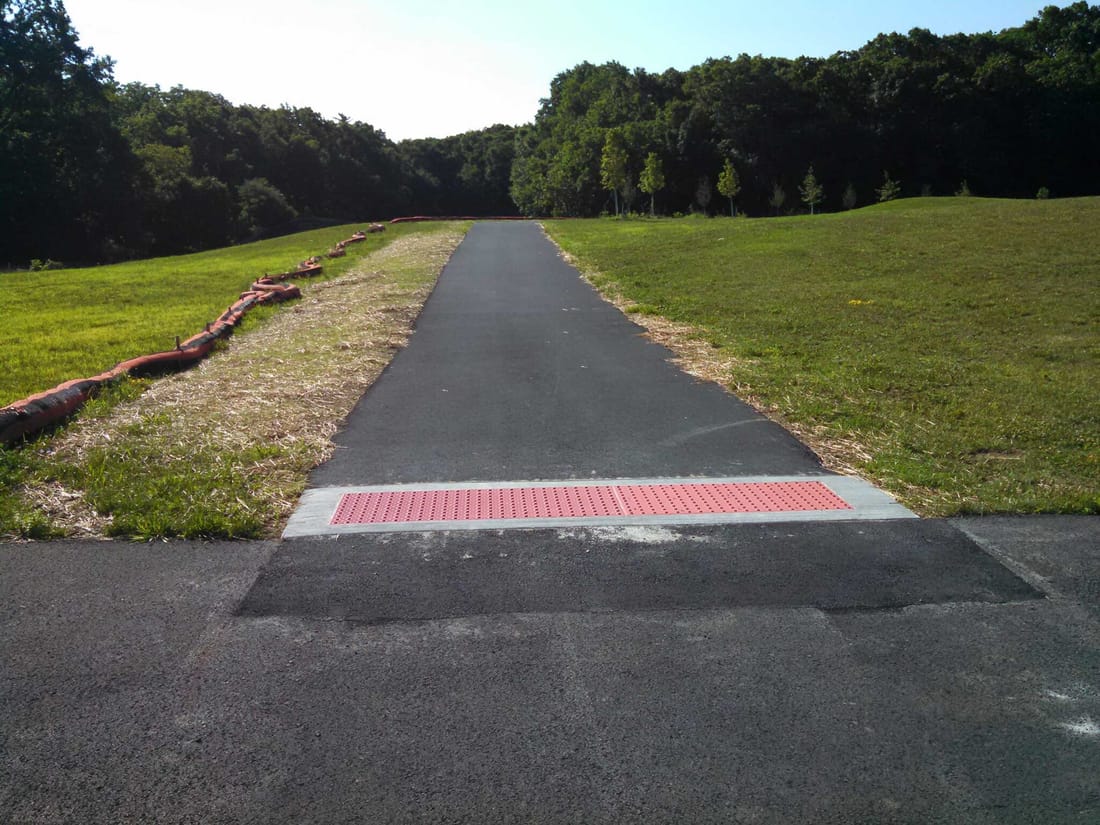
We can coordinate related items like concrete curb ramps at street crossings, gravel shoulders along the path edge, or steel bollards to keep unauthorized vehicles off your new trail. All design decisions are made with long term maintenance and winter conditions in Denver firmly in mind.
What Drives Cost for Asphalt Pathways, Sidewalks, and Trails
Property owners often ask why two similar looking paths can have very different prices. Precision Asphalt Denver is transparent about the factors that actually drive the cost of asphalt pathway paving so you can plan accurately.
Access is one of the biggest variables in Denver. If crews and equipment can back right up to the work area from a nearby parking lot, production is fast and costs are lower. If your trail runs behind buildings, across steep slopes, or through fenced areas with limited entry points, we may need smaller equipment, hand work, and more labor time, which increases cost.
Existing conditions matter. Removing old concrete, dealing with thick tree roots, or rebuilding soft, saturated subgrade soils all take time and materials. On some greenbelt projects we discover underground irrigation or drainage lines at shallow depth. In those cases we may give you options to reroute the path slightly or adjust the section so we protect those utilities.
Thickness and base quality are another driver. A narrow garden walkway that only sees foot traffic can use a lighter section. A HOA loop path that will carry maintenance carts or plow equipment in winter needs more base rock and thicker asphalt, which costs more up front but prevents constant patching later.
Project size affects unit pricing. A 30 foot connector path behind a single building has the same setup needs as a longer project, so the cost per foot is higher. Larger projects let us spread mobilization, traffic control, and management time over more square footage, so the per foot cost usually drops.
Finally, timing and phasing influence price. If you need work done in tight windows around school hours, business operations, or event schedules, we can phase the project, but it may require multiple mobilizations. We will explain each option so you can decide what balance of disruption and budget makes sense for your site.
Common Denver Pathway Problems and How We Solve Them
Pathways and sidewalks in the Denver area tend to fail in predictable ways, especially when they were built light or without attention to drainage. At Precision Asphalt Denver, we see the same patterns across Aurora, Lakewood, Arvada, and central Denver, and we have repair strategies that address the root causes.
Alligator cracking and settlement often occur where water sits next to the path, such as along over‑irrigated turf or in low spots. In those areas we rarely recommend a simple overlay. Instead, we usually remove the failed asphalt, rebuild the base with proper compaction, and adjust grades or install shallow swales so runoff moves away from the path in future storms.
Heaving from tree roots is another common complaint along neighborhood sidewalks and trails. For minor lifts, we may grind the surface to remove trip hazards and add a thin leveling course. For more serious displacement, we coordinate with you and, when needed, your arborist to cut and bridge roots or shift the alignment of the path slightly, then rebuild that section with a thicker structure that is more tolerant of root activity.
Edge raveling happens when the side of a path is left unsupported and soil erodes away. Over time the exposed asphalt edge breaks down and crumbles. Our fix is to saw cut to sound material, rebuild the edge with proper base support, and often add a small gravel shoulder or topsoil and seed to protect the new edge from future erosion.
In older properties, we frequently see steep cross slopes or abrupt changes that do not meet current accessibility expectations. Where practical, we regrade and repave sections to create smoother transitions and compliant slopes, without forcing you into a full site reconstruction. We can phase these improvements so you can address the worst sections first while budgeting for later work.
Throughout any repair project, we focus on keeping access open. For schools and multifamily properties, we plan work so that key entrances and main routes remain usable, setting up temporary detours and clear signage so residents, students, and visitors know exactly where to walk or ride during construction.
What to Know Before You Hire an Asphalt Pathway Contractor
Before you select a contractor for pathway or trail work in Denver, it helps to know what to ask so you end up with a surface that lasts. Precision Asphalt Denver encourages potential clients to focus less on the lowest dollar number and more on what is actually included in the scope.
Ask how the contractor will handle base preparation. Will they compact the subgrade, add a specified thickness of aggregate base, and provide compaction testing or at least documented passes with the roller for larger projects? The long term performance of asphalt pathway paving in Colorado is heavily tied to that unseen base work.
Confirm that drainage and snow removal are part of the conversation. A good contractor will talk about cross slope, where melt water will go, and how plow blades or snow blowers should be set to avoid gouging fresh asphalt. You should come away with clear guidance on when it is safe to plow and what deicers are compatible with your new surface.
For HOA paths, business complexes, and schools, clarify access and phasing up front. You will want a written plan for how residents, customers, or students will reach buildings while routes are under construction, and how noise and dust will be controlled.
Finally, ask for examples of similar work in the Denver area, not just parking lots or roads. Pathways and trails have different stresses and design considerations. At Precision Asphalt Denver we can point you to completed projects near you and explain what we did on each one and how they have held up through recent winters. With the right questions and a contractor who is willing to answer them clearly, you can invest in pathways, sidewalks, and trails that remain safe, attractive, and easy to maintain for years.