Home › Commercial Asphalt Resurfacing & Overlays
Refresh aging pavement with commercial asphalt resurfacing in Denver, CO. We repair trouble spots, mill where needed, then install a smooth asphalt overlay that restores ride quality, improves appearance, and extends the life of your parking lot or drive without a full rebuild.
Precision Asphalt Denver provides professional commercial asphalt resurfacing throughout Denver, CO, Colorado and the surrounding area. Our licensed, insured crew delivers safe, clean, on-time work with a free estimate before anything begins. Call (720) 807-8328 or request your free quote.
Commercial Asphalt Resurfacing for Denver Properties
Commercial asphalt resurfacing is usually the right move when your parking lot or private road is worn, cracked, and ugly, but the base underneath is still sound. Instead of tearing everything out, Precision Asphalt Denver installs a new asphalt layer over the existing surface (an overlay), restoring function and appearance at a lower cost than full reconstruction.
In the Denver area, resurfacing decisions are heavily affected by freeze-thaw cycles, snowmelt, and deicing chemicals. Those conditions accelerate cracking and raveling on the surface, but do not always destroy the base. Our first step on any commercial asphalt resurfacing project is to determine whether your current pavement can safely support an overlay or if certain sections need more serious structural repair.
This page explains how resurfacing and overlays actually work, what you can expect the process to look like on your property, what drives cost, and how we adapt each project to Denver, Colorado conditions so you get pavement that holds up through many winters.
Site Evaluation and Deciding if Resurfacing is Appropriate
Before we recommend commercial asphalt resurfacing, Precision Asphalt Denver evaluates three things: subgrade strength, drainage, and existing damage patterns.
We start with a visual inspection and walk the lot or roadway, flagging areas of alligator cracking, rutting, standing water, and previous patching. Alligator cracking and deep ruts often signal base or subgrade failure. Those areas usually need to be cut out and rebuilt before any overlay is installed. If we simply pave over them, the cracks will reflect through your new surface within a season or two.
Next, we look at drainage. In Denver, poor drainage combined with freeze-thaw cycles is a major cause of premature pavement failure. We note low spots where water sits after storms or snowmelt and check that inlets and pans are positioned correctly. Sometimes resurfacing is paired with minor grading adjustments or leveling to improve drainage and prevent ice sheets in winter.
If needed, we may core or saw-cut small sections to check asphalt depth and base condition. On heavy-use commercial drives or truck routes, we verify that the existing structure can carry your traffic loads. At the end of this evaluation, we will tell you honestly if resurfacing is a smart investment for your Denver property or if full-depth reconstruction would be more cost effective long term.
Step-by-Step Process: How Commercial Asphalt Resurfacing & Overlays Are Done
Once resurfacing is confirmed as a good option, Precision Asphalt Denver follows a defined sequence to avoid shortcuts that lead to failures.
1. Surface cleaning and prep: We mechanically sweep the lot, then blow or power broom all areas to remove sand, debris, and loose aggregate. In Denver, windblown grit and winter sanding material can be significant, so thorough cleaning is critical for good bond.
2. Localized repairs: Areas with severe alligator cracking, potholes, or base failures are saw-cut, excavated, and rebuilt with new base rock and hot-mix asphalt. If there are utility trenches that have settled over time, we address those before the overlay so they do not telegraph through.
3. Milling and transitions: To avoid creating trip hazards or drainage issues, we typically mill (grind) the existing asphalt at tie-in points like sidewalk ramps, garage entrances, ADA routes, and around drains. This lets us maintain proper elevations after we add the new overlay layer.
4. Crack treatment: Wider working cracks are cleaned and, depending on condition, may be filled or routed and sealed. The goal is to reduce the chance of those cracks reflecting through the new overlay too quickly.
5. Tack coat application: We apply an asphalt emulsion tack coat across the area to be resurfaced. This acts like a glue that bonds the new overlay to the old surface. In our dry Colorado climate we pay attention to curing time so the tack is ready when the mix arrives.
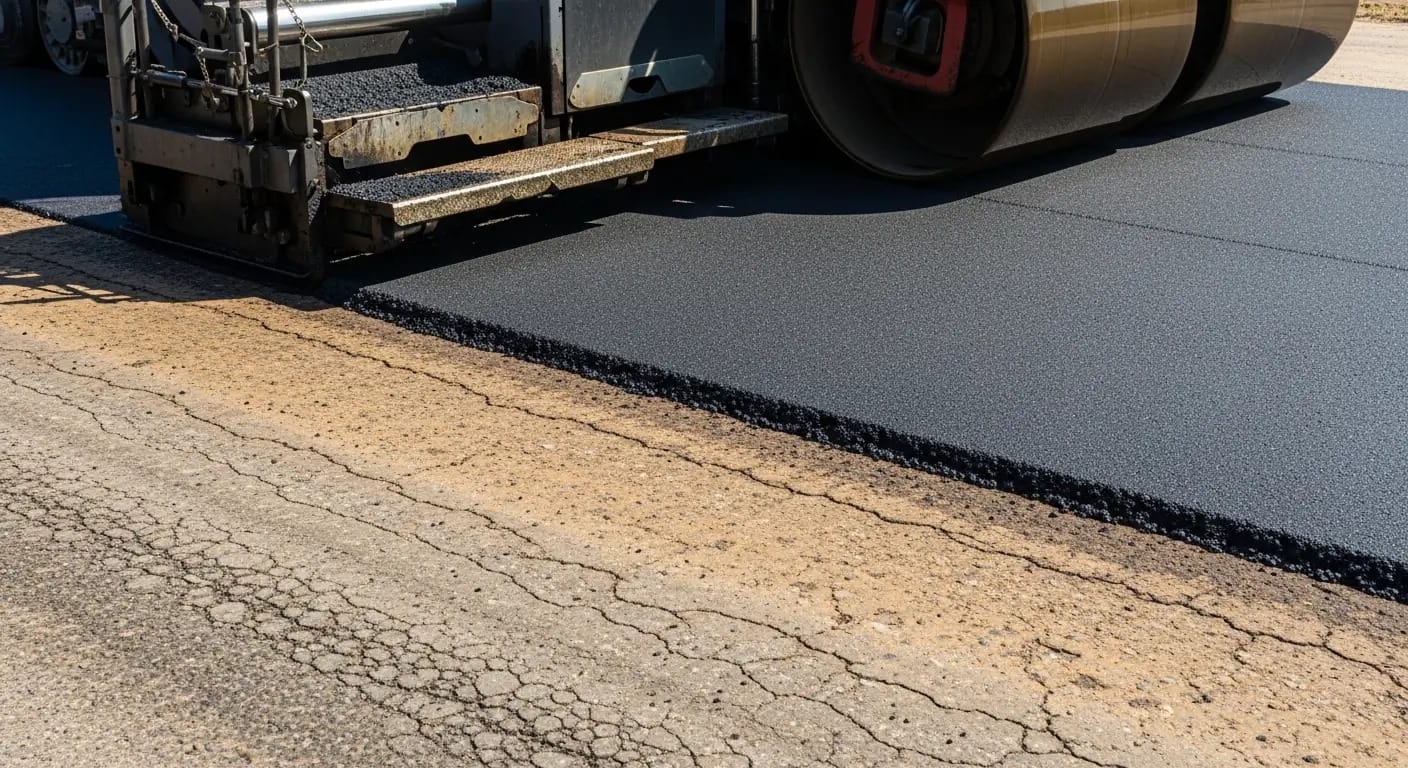
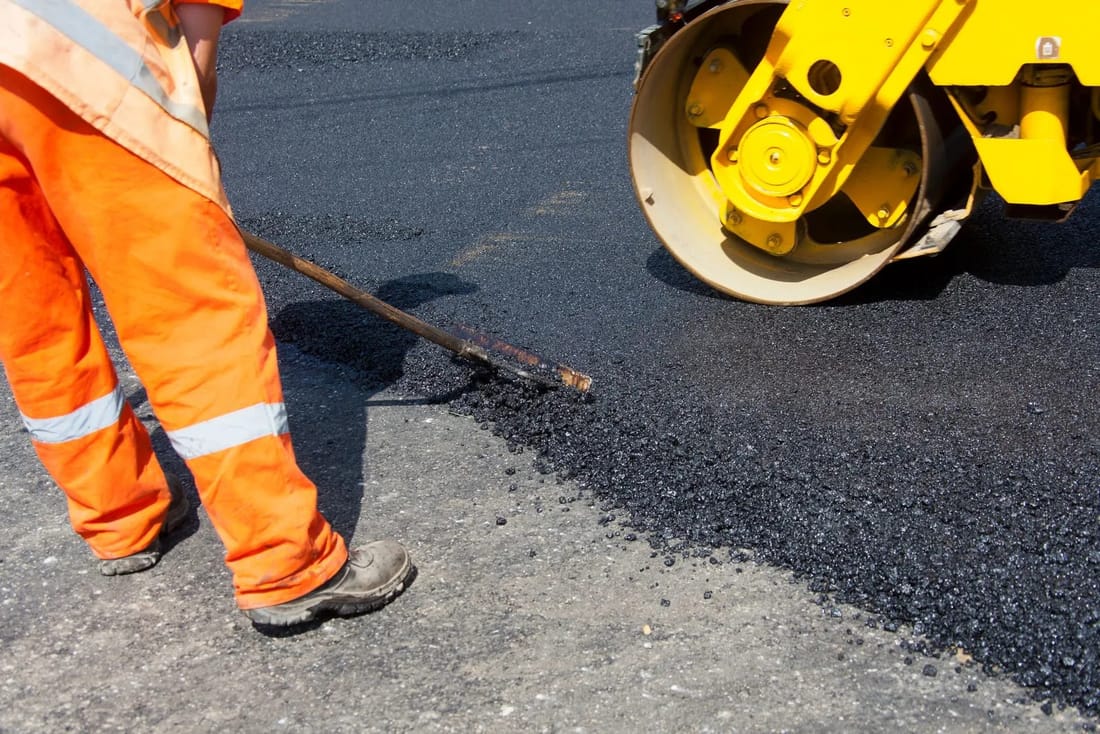
6. Overlay installation: Hot-mix asphalt is placed using a paver, then compacted with steel drum and rubber-tire rollers. For typical commercial lots we commonly install 1.5 to 2 inches for light to moderate traffic, and thicker sections where there are frequent trucks or delivery traffic.
7. Joint compaction and detail work: Longitudinal joints, edges around concrete, and tight areas are compacted carefully to prevent future unraveling. We know these spots are usually where early failures show up if they are not done correctly.
8. Striping and markings: After the new surface cools and cures, we lay out and paint parking stalls, ADA spaces, fire lanes, and directional markings in compliance with local Denver and Colorado codes.
Material Options, Thickness, and Design Choices for Denver Traffic Loads
Not every commercial asphalt resurfacing project should use the same mix or thickness. Precision Asphalt Denver adjusts the design based on how your pavement is used and on local climate conditions.
For office and retail parking lots with mostly passenger vehicles, an overlay thickness of 1.5 to 2 inches using a dense-graded surface mix is usually appropriate. For grocery stores, distribution centers, or properties with regular semi-truck traffic, we either increase the overlay thickness or combine resurfacing with full-depth reconstruction in the wheel paths or loading zones.
In Denver, we select mixes that balance flexibility and durability in freeze-thaw cycles. Asphalt that is too stiff is prone to thermal cracking in cold snaps. Asphalt that is too soft can rut in summer heat, especially where trucks turn sharply. We work with local plants to specify mixes that are proven on Front Range commercial sites, not just generic state highway specs.
We also look at your long-term maintenance plan. Clients who want to maximize overlay life often pair resurfacing with scheduled sealcoating and crack sealing. With that approach, a properly designed commercial overlay in Denver can often last 12 to 18 years depending on usage and drainage.
Slope adjustments can be built into the overlay design as well. By fine-tuning asphalt depth in select areas, we can redirect standing water away from entrances, accessible routes, or recurring ice spots, which is a common concern for Denver property managers.
Cost Drivers, Scheduling, and Minimizing Business Disruption
The cost of commercial asphalt resurfacing in Denver varies based on several specific factors, and we walk you through them so there are no surprises.
Key cost drivers include:
• Square footage and layout complexity. Large open areas are more efficient to pave than small, broken-up lots around multiple buildings.
• Amount of base repair and patching. If many areas require full-depth replacement before the overlay, cost increases, but so does long-term reliability.
• Overlay thickness and mix design. Heavier sections for truck traffic use more material and require more compaction passes.
• Milling and elevation work. Tying into existing concrete, drains, and ADA paths often requires precise milling to maintain compliance and good drainage.
• Access and staging. Tight downtown Denver sites or garages require more labor coordination than open suburban lots.
Scheduling is another critical piece. For active shopping centers, medical offices, or industrial parks, Precision Asphalt Denver typically phases work so part of the lot remains open at all times. We can schedule high-impact work during off-hours or weekends when feasible. In colder months, we plan around Denver temperature swings and limit resurfacing to conditions that allow proper compaction and bonding.
Before we begin, you receive a clear schedule, a traffic control plan, and guidance on tenant and customer notices, so everyone knows what to expect and when each area will reopen.
Common Resurfacing Issues in Denver and How We Prevent Them
Commercial overlays in Denver fail early for a handful of predictable reasons: overlaying over bad base, poor drainage, weak bond to the existing surface, or improper compaction. Precision Asphalt Denver structures each project to avoid those traps.
Reflective cracking is the most common complaint. To reduce it, we repair structurally failed sections instead of paving over them, treat significant cracks, and select mix designs that tolerate temperature movement. We are candid that some minor reflective cracking over many years is normal, but our goal is to slow that process as much as possible.
Drainage-related failures are another Denver-specific problem, especially near snow piles and shaded areas where ice lingers. Before resurfacing, we look for and correct low spots, reshape around inlets, and recommend where snow should be stockpiled to keep meltwater from repeatedly soaking and refreezing on the same area.
Bond failures show up as slippage or shoving, particularly on slopes or at stop bars. We prevent this with proper cleaning and uniform tack coat, and by avoiding paving over dust and winter sand. During compaction, we pay close attention to areas where drivers brake heavily, like intersections and entrances.
Finally, we give you a clear maintenance plan tailored to your property. That typically includes when to schedule the first sealcoat, how often to inspect and seal cracks, and what plowing practices are safest for your new surface. With realistic expectations and proper upkeep, a commercial asphalt resurfacing project in Denver can provide long, reliable service without the cost and disruption of full reconstruction.