Home › Road, Street, and Municipal Paving
Partner with a dependable crew for road paving in Denver, CO. We construct and resurface streets, subdivisions, and municipal roads with proper grading, compaction, and mix design so traffic flows smoothly and your pavement stands up to weather and heavy use.
Precision Asphalt Denver provides professional road paving throughout Denver, CO, Colorado and the surrounding area. Our licensed, insured crew delivers safe, clean, on-time work with a free estimate before anything begins. Call (720) 807-8328 or request your free quote.
Road, Street, and Municipal Paving in Denver, CO
Municipal roads in Denver live a hard life: freeze-thaw cycles, snowplows, deicing chemicals, intense sun, and heavy traffic from passenger vehicles and commercial fleets. Precision Asphalt Denver focuses specifically on building and maintaining roadways that hold up under these Colorado conditions, not just for the first year, but for the long haul.
When a city, county, special district, or HOA needs road paving, our first step is not bringing out the paver. We start with a site walk, traffic observation, and a review of existing failures such as rutting, alligator cracking, and drainage problems. For Denver projects, we also check how snowmelt is currently moving through the street, where water is ponding, and how often heavy trucks use the route. All of this informs whether your road needs a mill and overlay, full-depth reconstruction, or a structural strengthening overlay.
Because every block in Denver is a little different, we tailor our paving approach to each street or municipal facility. Lightly traveled residential lanes in neighborhoods like Park Hill need a different pavement structure than bus routes or industrial access streets near I 70. Precision Asphalt Denver uses local experience and current CDOT and Denver Public Works standards to recommend practical options that fit performance requirements and budget.
How Professional Road Paving Actually Gets Done
Effective road paving is a sequence of carefully timed steps, each one affecting the final life of the pavement. After planning and traffic control setup, we start with surface preparation or demolition. For overlays, this usually means milling off a specific thickness, often 1.5 to 3 inches, to remove cracked material and to maintain existing curb reveal and drainage patterns. For full-depth reconstruction, we remove the pavement entirely and evaluate the subgrade.
Next comes subgrade evaluation and stabilization. Along the Front Range, we commonly see expansive clays and variable fill. Precision Asphalt Denver performs proof rolling to identify soft or pumping areas. Where the base is weak, we may undercut and replace with road base, use geotextile separation fabrics, or stabilize the subgrade with cement or fly ash depending on site conditions and agency standards.
After the foundation is corrected, we install or recondition the aggregate base course. In Denver, this usually involves a Class 6 or similar crushed aggregate compacted to a specified density, often 95 percent of modified Proctor. Proper moisture conditioning and compaction are critical in our dry climate, because a dry base will continue to compact under traffic and create ruts in the asphalt above.
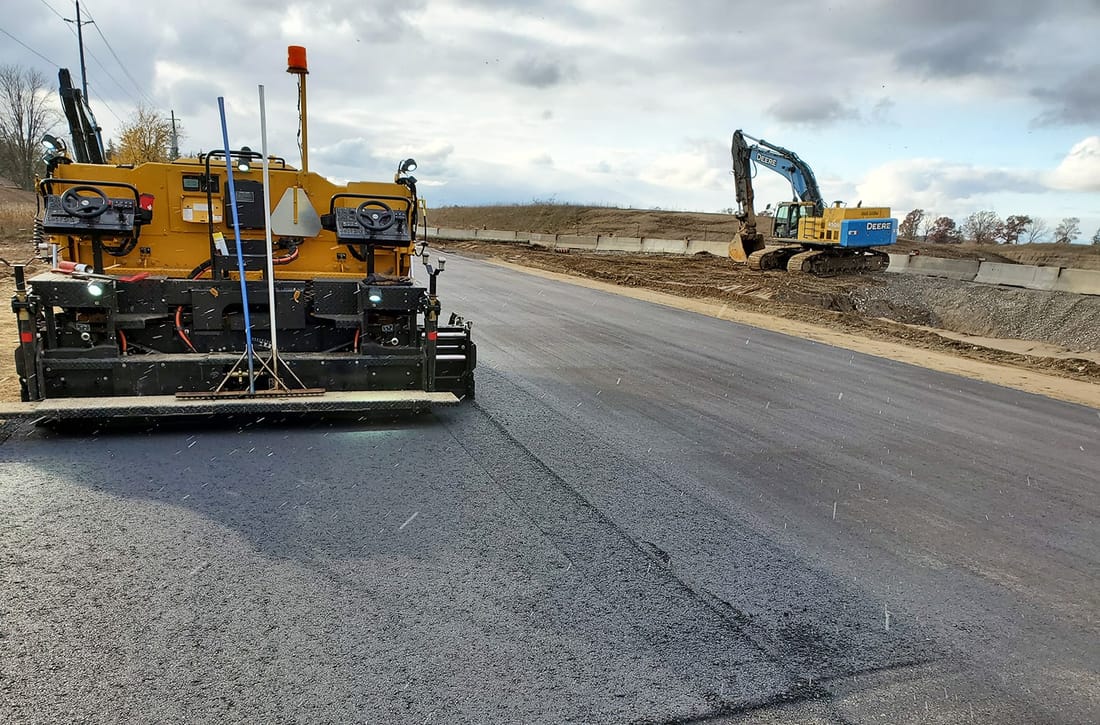
Once the base is proven with density tests, we place hot mix asphalt. For municipal streets, this is often done in lifts, such as a structural base course followed by a finer surface course. Each lift is laid at a controlled thickness, then compacted with steel drum and pneumatic rollers while the mix is still in the optimal temperature range. In Denver, cooler mornings can shorten the compaction window, so we plan paving sequences around sun exposure and ambient temperature to avoid cold joints and low density areas.
Material Choices and Pavement Design for Denver Streets
Good road paving is not just about thickness. It is about using the right mix designs and structural layers for the specific street. Precision Asphalt Denver works with local asphalt plants to select mixes that balance rut resistance, cracking resistance, and workability. On busier Denver streets, we often recommend stiffer Superpave mixes or polymer modified binders that better handle heavy wheel loads and hot summer temperatures.
For residential or lower speed streets, a standard Denver or CDOT approved mix with a well graded aggregate structure usually performs very well when placed over a strong base. We may adjust aggregate size and binder content to match the anticipated traffic and the desired surface texture. For example, cul de sacs that see frequent turning movements benefit from a slightly tighter surface mix that resists shoving.
In some municipal applications, blending asphalt sections with concrete features is important. Transitions at gutter pans, intersections, and utility crossings need special attention to prevent reflective cracking. We often use thicker asphalt or localized reinforcement at these points, combined with saw and seal techniques if specified. For bike lanes and school zones, we can coordinate with the municipality on colored coatings or high friction surface treatments once the main paving is complete and the asphalt has cured.
Our designs always consider Denver's freeze thaw pattern. That means controlling air voids and density to reduce water infiltration, maintaining proper cross slope for drainage, and limiting permeable joints. Precision Asphalt Denver works to balance first cost with life cycle cost, so agencies and HOAs see fewer potholes and less frequent major rehab over the life of the street.
What Drives Road Paving Cost in Denver
Road paving budgets are a major concern for cities, special districts, and communities, so we are direct about what really affects cost. The largest driver is the extent of base and subgrade repair needed. A street that only needs a 2 inch mill and overlay will be far less expensive per lane mile than a roadway with widespread base failure that requires full depth reconstruction. This is why a detailed condition assessment at the start is essential.
Project size and phasing also affect unit pricing. Longer continuous stretches of road allow more efficient use of milling machines, pavers, and rollers, which lowers the cost per square yard. Short, scattered segments or many small tie ins around utilities require more mobilizations and handwork, which adds to labor time. Precision Asphalt Denver helps agencies group projects and schedule work to get the most value from their paving dollars.
Access and traffic control are the next major factors. Busy collector streets, bus routes, or corridors near schools may need complex detours, flagging crews, off peak or night work, and coordination with RTD. These safety and traffic management measures are necessary, but they do add to the bottom line. Quiet local streets with simple closures are typically more cost effective to pave.
Material choices, such as polymer modified binders, thicker sections, or special surface treatments, raise initial cost but can often extend pavement life. We provide clear line item pricing that shows the effect of thicker lifts or upgraded mixes so decision makers can choose between a lower upfront cost and a longer service life. Finally, timing matters. Scheduling major work outside the coldest winter months in Denver reduces weather delays and rework, which ultimately saves money.
Common Roadway Problems and How We Fix Them
Denver roads see a specific pattern of distress, and each issue calls for a different solution. Alligator cracking, which looks like a network of scales, usually indicates structural failure in the base or subgrade. Precision Asphalt Denver does not simply overlay this kind of damage. We remove and replace the failed areas at full depth, rebuild the base, then tie back into sound pavement so the crack pattern does not quickly return.
Rutting is another frequent problem on bus routes, truck corridors, and intersections where vehicles stop and start repeatedly. Ruts hold water, which turns into ice in winter. To address rutting, we check whether it is confined to the asphalt layers or if the base has deformed. If the base is sound, we can mill out the ruts and place a rut resistant mix. If the rutting goes deeper, a more extensive rehabilitation is needed.
Potholes and edge failures often trace back to drainage. Places where water frequently stands or where the shoulder has eroded will continue to break down if water management is not corrected. When we repair these, we look at gutter grades, inlet locations, and shoulder support. Solutions may include adjusting cross slopes, rebuilding shoulders, or improving the tie in to adjoining pavement so water does not sit along the joint.
Reflective cracking over old joints or utility trenches is very common in older Denver neighborhoods. Depending on the budget and timeline, we can mill deeper to remove joints, use interlayer fabrics to delay reflection, or plan for periodic crack sealing as a maintenance strategy. We walk municipal clients through the pros and cons of each approach so they can balance appearance, long term performance, and ongoing maintenance costs.
Planning, Phasing, and What to Expect When You Work With Us
Road and municipal paving affects residents, businesses, and emergency access, so successful projects require clear communication and careful phasing. Precision Asphalt Denver typically begins by coordinating with the agency or HOA on traffic control plans, detours, and notification methods. For neighborhood streets, this may include door hangers and posted signs with specific closure dates and parking instructions.
Once construction begins, you can expect a sequenced process. First, we set up traffic control and perform any milling, base repairs, and utility adjustments. This phase can look messy, but it is where the foundation for a long lasting street is built. We keep access for trash, mail, and emergency services open according to local requirements and coordinate with school schedules whenever possible.
Paving days are tightly scheduled around Denver's weather patterns. We monitor temperature and forecasted storms and will not place asphalt if conditions would compromise compaction or bonding. During paving, streets or lanes may be closed for several hours to allow rolling and cooling. We give clear timelines so residents and businesses know when they can drive on the new surface.
After paving, we return for striping, signage, and any specialty markings such as crosswalks, bike symbols, or school zone legends. A final walkthrough with the client checks smoothness, drainage, and adherence to the agreed plans and specifications. Precision Asphalt Denver then provides recommended maintenance intervals for crack sealing, sealcoating where appropriate, and future overlays, so you can plan budgets and keep your Denver roads performing safely and smoothly for years.