Home › Speed Bumps, Curbs, and Asphalt Accessories
Control traffic and protect pedestrians with professional speed bump installation in Denver, CO. We install asphalt speed humps, curbs, and other accessories that slow vehicles, guide parking, and help you manage traffic safely around your property.
Precision Asphalt Denver provides professional speed bump installation throughout Denver, CO, Colorado and the surrounding area. Our licensed, insured crew delivers safe, clean, on-time work with a free estimate before anything begins. Call (720) 807-8328 or request your free quote.
Practical Traffic Control Solutions for Denver Properties
Speed bumps, curbs, and related asphalt accessories are not cosmetic add-ons. They are tools to control speed, separate vehicles from pedestrians, and protect your pavement investment. Precision Asphalt Denver installs these features for apartments, HOA streets, schools, churches, shopping centers, industrial yards, and private drives across the Denver metro area.
Denver properties face a specific problem: long, straight access drives and parking lanes encourage higher speeds, especially in winter when lots feel emptier and at night when visibility drops. That is when near misses in crosswalks and tight corners happen. Properly placed speed bumps and curbs force drivers to slow down where it matters, like at building entrances, loading docks, pedestrian crossings, and drive-thru lanes.
Our approach is simple and direct. We evaluate how vehicles actually move on your site, where pedestrians walk, and how snow and drainage work on your property. Then we recommend specific devices that fit your traffic pattern, whether that is asphalt speed bumps, concrete curbs, wheel stops, bollards, raised crosswalks, or a combination. Everything is designed around your pavement and Denver’s climate, not just dropped in to match a catalog picture.
How Speed Bump Installation Really Works
Quality speed bump installation is about more than dropping some asphalt across a lane. To perform well and avoid constant patching, each bump has to be sized, placed, and built correctly for the vehicles that use your property.
First, Precision Asphalt Denver walks the site with you. We identify conflict points, review any incident history, and note grades, drainage paths, and snow storage areas. For private roads and larger lots, we often suggest a short traffic calming plan that shows each bump, curb, and accessory on a simple sketch so you know exactly what is going where.
Next, we mark and cut the pavement if we are installing permanent asphalt speed bumps. We saw-cut the edges to create a clean rectangle or trapezoid so the new asphalt ties into existing pavement without feathered, weak edges. For overlays, we may mill shallow sections so the finished bump height is correct while maintaining drainage.
We then install and compact a dense graded asphalt mix, shaping each bump to a controlled height and length. Typical private lot bumps in Denver range from 2.5 to 3 inches high, with profile adjusted for expected traffic. For fire lanes, industrial yards, or frequent truck routes, we often recommend longer, gentler humps instead of short, harsh bumps to avoid vehicle damage and complaints.
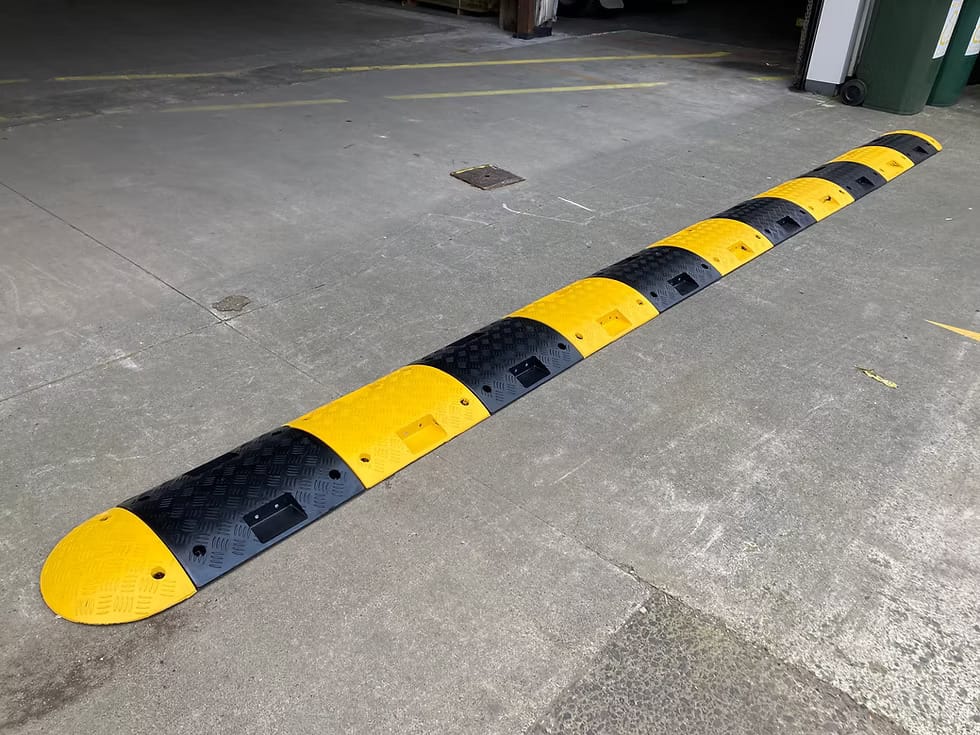
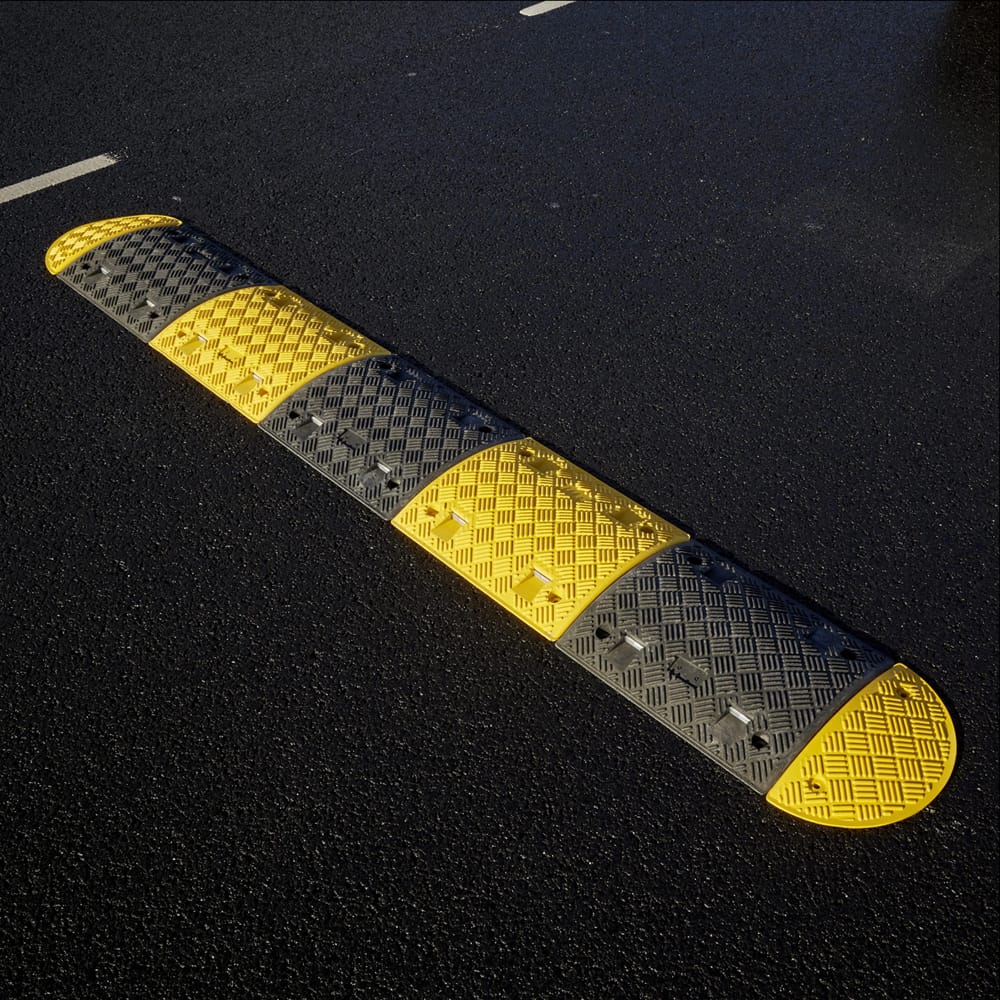
After compaction, we apply high visibility striping and, where needed, reflective markers. We coordinate with you on signage so drivers see the bump in time, which matters in winter when bumps can be obscured by snow or low sun. When requested, we also install modular rubber or plastic bumps using mechanical anchors, typically for temporary or test locations where the layout may change later.
Curbs, Wheel Stops, and Asphalt Accessories
Curbs and related accessories shape how vehicles use your property. Poorly placed or damaged curbs lead to cars overrunning sidewalks, hitting landscaping, or backing into structures. Precision Asphalt Denver installs and repairs several types of curbs and accessories to keep traffic where it belongs.
Concrete curbs: We form and pour new concrete curbs for new layouts or after full depth repairs. Profiles include standard vertical curb, curb and gutter, and mountable curbs for drive entrances. The choice depends on how you want water to flow, how close cars park to sidewalks, and whether service trucks need roll-over access.
Asphalt curbing: In some commercial lots we install asphalt berm curbing. It is quicker and less expensive than concrete, and often used along landscaping islands or edges that are frequently reconfigured. We shape and compact the berm by machine, then seal any joints that intersect with main drive lanes.
Wheel stops and bollards: Where you want protection without full curbing, we install concrete or recycled rubber wheel stops, and bollards filled with concrete and set below frost depth. These accessories are common in front of storefront glass, loading docks, EV charging stations, and mail kiosk areas.
Other accessories: We also handle raised crosswalks, pedestrian refuge islands, small medians, and drainage features that tie into your curbs. All of these parts affect how snow equipment can operate, how water leaves your lot, and where pedestrians feel safe walking.
Design Choices, Materials, and Denver Climate Considerations
Good speed bump and curb design has to account for Denver’s freeze thaw cycles, plowing needs, and sun exposure at altitude. Poorly chosen materials or layouts lead to broken bumps, ponding water, or recurring potholes at each device.
Material selection: For permanent installations, we typically recommend hot mix asphalt bumps on asphalt lots, and concrete or modular systems on concrete drives. Asphalt integrates best with asphalt pavement, flexes slightly with temperature changes, and can be resurfaced. Concrete curbs are still preferred for long runs and gutter lines because they hold profile and channel water predictably.
Profile and spacing: On residential HOAs and private lanes with light traffic, we can use shorter, steeper profiles to slow cars aggressively without overbuilding. On commercial and industrial sites, we adjust bump height and length to work with delivery trucks, fire equipment, and buses. Spacing is based on actual driving behavior: too far apart and drivers speed up between bumps, too close and you get complaints and increased vehicle wear.
Snow and drainage: In Denver, snow plowing is a major design factor. We discuss plow routes, blade types, and stacking areas before installation. For asphalt speed bumps, we recommend tapered leading edges and clear markings so plow drivers can lift blades in time. Curbs and raised devices are laid out with drainage slopes, so meltwater does not sit in front of bumps and then refreeze into ice sheets.
Color and marking: We typically apply reflective yellow or white stripes on speed bumps, and can add high contrast paint to curbs at corners, fire lanes, or pedestrian crossings. On shaded north facing areas, more aggressive marking and signage is usually worth the extra cost because ice lingers there longer and sight lines are reduced.
Costs, Scheduling, and What Drives Your Price
Property owners in Denver often ask why speed bump installation prices vary so much between bids. The answer is that several site specific factors matter more than the length of each bump or curb run.
Access and phasing: If we can bring equipment straight to the work area and complete everything in one mobilization, costs are lower. When work has to be phased around business hours, school drop off times, or garage access windows, we plan shorter work blocks and additional traffic control, which adds to labor.
Existing pavement condition: Building on top of cracked, alligatored, or soft pavement is a mistake. Precision Asphalt Denver will often recommend localized base repair or patching before installing bumps or curbs so they do not fail prematurely. This can add upfront cost but avoids tearing out new devices within a season or two.
Permanent vs removable: Permanent asphalt or concrete installations cost more initially than simple bolt down rubber bumps, but hold up better under plows and heavy vehicles. We sometimes recommend modular systems for temporary traffic calming tests, special events, or properties that may be redeveloped.
Extras: Markings, signage, and related striping work are often a small part of the budget but have a large impact on results. If you are already restriping or sealcoating, we can often combine scope and reduce total cost. During estimating, we line item these options so you can decide what to include now and what can wait until a future maintenance cycle.
Scheduling: This work is temperature dependent. In Denver we typically schedule asphalt bump and curb work from late March through October, with concrete work extending slightly beyond that window if conditions allow. For schools and HOAs, we coordinate summer or off peak schedules to limit disruption.
What to Expect Working With Precision Asphalt Denver
Our goal is to install speed bumps, curbs, and accessories that quietly do their job for years with minimal complaints and maintenance. That starts with clear communication and realistic expectations.
Site review and proposal: We meet you onsite, walk the traffic paths, ask about problem drivers and near misses, and look at drainage and snow history. Within a short period we send a written proposal that shows quantities, locations, and types of devices, along with a straightforward price and scheduling notes.
Pre job planning: Before work begins, we confirm access needs, business hours, and any special accommodations like ADA routes, emergency access, or deliveries. For larger sites, we provide a simple phasing plan you can share with tenants or staff so they know where to park and when.
Installation: Our crews show up with the equipment and materials needed to complete the planned scope. We maintain traffic through the site, block off work zones clearly, and keep you updated during the day. For most small and mid sized properties, speed bump installation and related curb or accessory work is completed in one or two days.
Follow up and maintenance: We walk the site with you after the work is done to confirm locations, heights, and markings. We also discuss long term pavement maintenance, such as sealcoating and crack sealing, that will help your new devices last. If any minor adjustments are needed to striping or markings, we handle them promptly.
If you manage a property in Denver, Aurora, Lakewood, Thornton, or nearby communities and need practical, durable traffic control features, Precision Asphalt Denver is ready to review your site and recommend a solution that fits how your property is actually used.